History
Marshall P. Felch and His Dinosaur Quarry
Marshall P. Felch is best known for his days digging in a quarry near his farm in Garden Park just north of Cañon City, Colorado, from 1877 to 1888. He worked for Othniel C. Marsh, a paleontologist who lived and worked at Yale University, in the Peabody Museum, in New Haven, Connecticut. Marsh is most noted for his feud with the paleontologist Edward Drinker Cope in "The Great Bone Wars" during "The Guilded Age" of the late 1800's (Jaffe, 2000).
Years after Felch's death his daughter, Sarah, donated to Earl Douglass of the United States Geological Survey letters he had received over the years in correspondence with Marsh. As luck would have it, Marsh, too, had saved all his letters from Felch. The richness of the letters documents a rare glimpse into the lives of both men living at a time of great change and exploration in the United States. The letters from Felch are especially revealing as they describe life on the western frontier of the United States.
From the letters, Felch reveals himself to be an honest, hard working, interested, and fair man who attempts to balance financial uncertainty, weather extremes, ill health, and his family's well-being. Additionally, we see how Felch comes to understand the natural world around him - past and present.
Felch's story reveals the importance of local fieldworkers and collectors to scientific discovery. For example, Felch was one of the first amateur collectors to draw a quarry map that showed the location of the fossil bones. Because of local knowledge, scientists are able to gain access to important localities and specimens, and because of Felch's collaboration with Marsh, dinosaurs and the pre-historic world became known to the American public.
Brief Biography of Felch
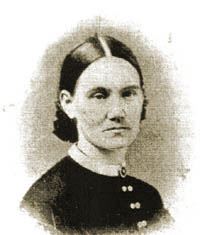
The fourth of ten children, Marshall P. Felch was born in Lowell, Massachusetts on June 20, 1834. He also lived in Chelmsford, Massachusetts, before moving to Oxford, New Hampshire. Eventually, he moved on to Vermont where he married his first wife Carrie M. Eastman in Bradford on January 27, 1859, who died only 14 months later on April 27, 1860 in West Fairlee, Vermont. But during that time Marshall and Carrie had a daughter who was raised by another family. After the untimely death of his wife, Felch joined the Union Army with H Company of the 4th Vermont Infantry, Unit 3032 as a hospital steward on August 29, 1861. He re-enlisted on February 15, 1864 and was finally discharged on July 13, 1865. In 1867 he married Amanda M. Colburn in Boston, Massachusetts before leaving for Denver, Colorado.
On July 29, 1868, Marshall and Amanda's first child, Sarah Ellen Felch, was born. Census records show that the family lived in Montezuma, Colorado for a brief time in 1870, where it is presumed their second child, Edward "Ned" Felch was born, before moving to and finally settling in Cañon City in 1871. Once in Cañon City, Marshall Felch and his family started to farm in an area known as Garden Park. Their third child, Webster E. Felch, and their last child, Willy N. Felch, were born in Cañon City. Both of these children died young: Willy passed away in May 1878 and is buried, along with his brother Webster, who died in 1884, next to Amanda in the Greenwood Pioneer Cemetery in Cañon City.
Click on the Map Image below for a larger PDF.
Surficial geology map with Felch Quarry designation in the Garden Park area of Canon City, Colorado created by Emmett Evanoff of the University of Colorado, Boulder and Ken Carpenter of the Denver Museum of Nature and Science. Felch Quarries are noted in relation to the rest of the fossiliferous geographic area.
The Quarry 1877-1878
The first discovery of dinosaurs bones near Cañon City occurred in late 1869 or early 1870, but it was not until an article appeared in the Cañon City Times in 1877 did Othneil C. Marsh first became aware of the fossils of Cañon City. Marsh immediately dispatched one of his trusted collectors, Benjamin Franklin Mudge, to Garden Park. Mudge was already in Colorado working with Arthur Lakes up in Morrison and so was familiar with the formation in which the dinosaur bones were found (Monaco, 1998).
The Felch Quarry sits at the edge of a small precipice over a gulch that leads into Four Mile Creek, which is the main drainage for Garden Park. Felch found the fossils in a hard sandstone layer, but the bones proved to be very fragile and upon removal from the matrix they began to crumble. Felch later realized that all the fossils came from the same layer of sandstone he called "the old river bed" (Felch 10/16/1887 letter to Marsh). It was after Mudge and Felch encountered the difficult process of excavating the fossils that Mudge asked Marsh for more assistance. Marsh sent another one of his collectors, Samuel W. Williston, to help.
Williston was concerned about the delicate nature of the fossils and so decided to draw the fossils in situ so that they could be reconstructed when they eventually arrived at Yale University. A total of thirty five boxes of bones and packages was sent to Marsh before work was stopped due to the poor preservation of the material. Despite the paucity of good material, Marsh was able to describe Apatodon mirus, Allosaurus fragilis and Diplodocus longus (Monaco, 1998) .
Felch Quarry nearing the end of its heyday in the summer of 1888. Note the channel in-filling in the cliff wall just below the buildings. It was in a similar bed of sandstone, over towards the wall of the quarry (to the left), that many of the best fossils were recovered from. Also, if you look closely at the image on the left you can see a circled figure standing there. It is not known if this is Felch, but chances are probably very good that it is. Photographer unknown. Image provided by Garden Park Paleontology Society.
The Felch Quarry today. The channel in-filling can still be seen, but the quarry itself has had sediments slide down its face along with having vegetation reclaiming the floor of the quarry. Photo by Donna Engard. Image provided by Garden Park Paleontology Society.
This initial excavation only lasted for a year. Mudge and Williston gave up on the quarry to concentrate on other quarrying prospects located in Como Bluffs, Wyoming, which proved to be less frustrating to quarry than the difficult sandstones of the Morrison Formation in Garden Park (Evanoff and Carpenter, 1994). Additionally, weather conditions, such as rain and flooding, would slow down the progress of pulling the already crumbly and highly weathered fossils from the floor of the quarry in "the old river bed."
The Quarry 1883-1888
Four years later in 1881, Felch and Marsh began correspondence regarding the quarry, and in 1882 Marsh asked Felch if he would be willing to reopen the quarry. Felch agreed, and in 1883 the digging was under way. All in all, over 270 crates of fossils were sent by railroad to Marsh at Yale. Most fossils were disarticulated (meaning the bones were separated from each other) except for a few that were nearly intact. In particular, the species Ceratosaurus nasicornis, Stegosaurus stenops, and Allosaurus fragilis were found almost fully complete.
These images are those of Ceratosaurus nasicornis (left) and Stegosaurus stenops (right). The fossils are two of the most complete specimens to come out of the Felch Quarry. Ceratosaurus nasicornis came out in 1883 and Stegosaurus stenops (aka "Roadkill") in 1885-1886. They are now on display at the Smithsonian. Photographer unknown. Images provided by Garden Park Paleontology Society.
Excavating fossils for Marsh was no easy task. Felch overcame numerous hardships that included flooding, which destroyed his crops, vandalism and trespassing in the quarry, and near poverty - all in the name of science. Frustration at the railroad company to deliver the fossils on time was also a common complaint from Felch. Sometimes the fossils would not make it to Marsh in a timely manner, and the shipments, which Felch had to pay for, always seemed to cost too much. On February 16, 1884 in a letter to Marsh, Felch regards the Denver & Rio Grande Railway Company in Cañon City as "notoriously a Corporation of Highway Robbers that fleece everyone that comes in their way."
Marsh paid Felch for his labor, but the work was hard and exhausting. From 1883 to 1885, Felch was paid $75.00 a month ($1,791 in 2017) and then in 1886 this was increased to $85.00 a month($2,108 in 2017) until the main excavations ended. However, when Felch worked in the quarry he could not tend to his farm and crops and so had to employ farm laborers to work his farm:thus the wages paid by Marsh also covered the wages Felch paid to his farm laborers.
After nearly five years of digging in the quarry, Felch began to feel it was "petering out" (Felch 10/16/1887 letter to Marsh). Along with the loss of his second son, Webster, to peritonitis in 1884, and frequent bouts of near financial disaster, Felch was working himself to death. The local doctor diagnosed him with having heart lesions, which had been slowing him down with periodic illnesses. By 1888, work at the Felch quarry came to an end. At the quarry's height of production there were storage sheds for fossils and supplies, a furnace, an outhouse, and a forge. Today, the wall of the quarry is covered with sediments that have slid down its face and the buildings have all gone.
The last years of correspondence indicate that times were hard on the Felch family, as Felch struggled to maintain the quarry while trying to obtain an army pension and stay in good health (Felch 2/10/1891 letter to Marsh). For a whole year (1890) Felch did not write Marsh. Although the reasons for this lack of correspondence is not known, one reason could have been the destruction of blocks of fossils and equipment by a man in an act of reprisal against Felch's son Ned. Felch now struggling with poor health (physically, and now emotionally), felt ashamed of such a tragedy and could not bring himself to tell Marsh for two years.
Felch remained in the Garden Park area and died at his ranch in 1902.
References
Evanoff, E., and Carpenter, K., 1998, History, sedimentology, and taphonomy of Felch quarry 1 and associated sandbodies in the Morrison formation near Garden Park, Fremont county, Colorado, Modern Geology, Vol. 22, pp. 145-169.
Felch, M.P., 1882-1892, in his letters to O.C. Marsh, Special Collections Division, Marriott Library, University of Utah, Salt Lake City.
Jaffe, M., 2000, The gilded dinosaur: the fossil war between E.D. Cope and O.C. Marsh, and the rise of American science, First Edition, Crown Publishers, New York. 424. ISBN: 0-517-70760-8.
Johnson, W.C., McMaster, R.B., Sorenson, C.J., 1981, Changing rangeland usage in Garden Park, Colorado, Great Plains-Rocky Mountain Geographical Journal, Vol. 9, p. 59-71.
Monaco, Patricia E., 1998, A Short History of Dinosaur Collecting in the Garden Park Fossil Area, Cañon City, Colorado, Modern Geology, Vol. 23, p. 465-480.